2024

2024

Saving money by giving the answer the company didn't want

Saving money by giving the answer the company didn't want

How we used interviews to invalidate a product that was almost certain to be built and delivered a list of new priorities that prevented spending thousands of dollars per month on a product with a low chance of success.

Resulting in the saving of:

~R$ 150k

~R$ 150k

per month, building the product

~1100 hours

~1100 h

~1100 hours

per month, with the building team

Opportunity cost

Opportunity cost

resources can be used in projects with real return for the company

Responsibilities

Research planning

Discovery of opportunities

Translation of opportunities into solutions

Design of solutions

Validation

Company

ilegra

Role

UX/UI Designer

I chose to try a different presentation format to improve the narrative of this case. Let me know what you think :)
The challenge

The challenge

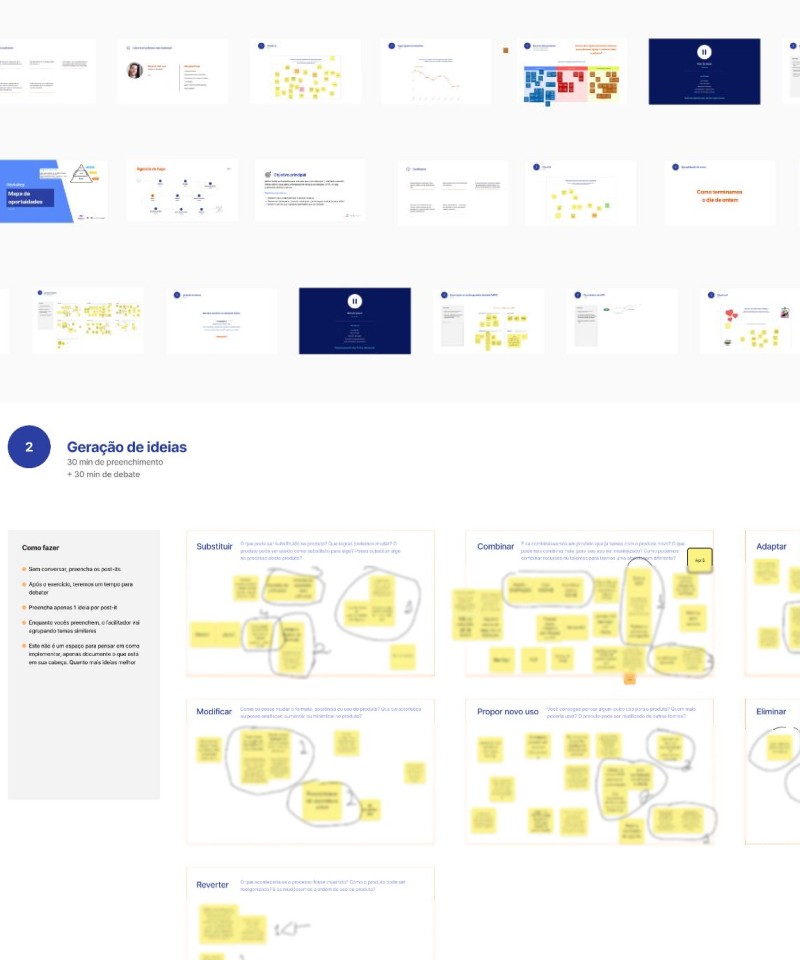
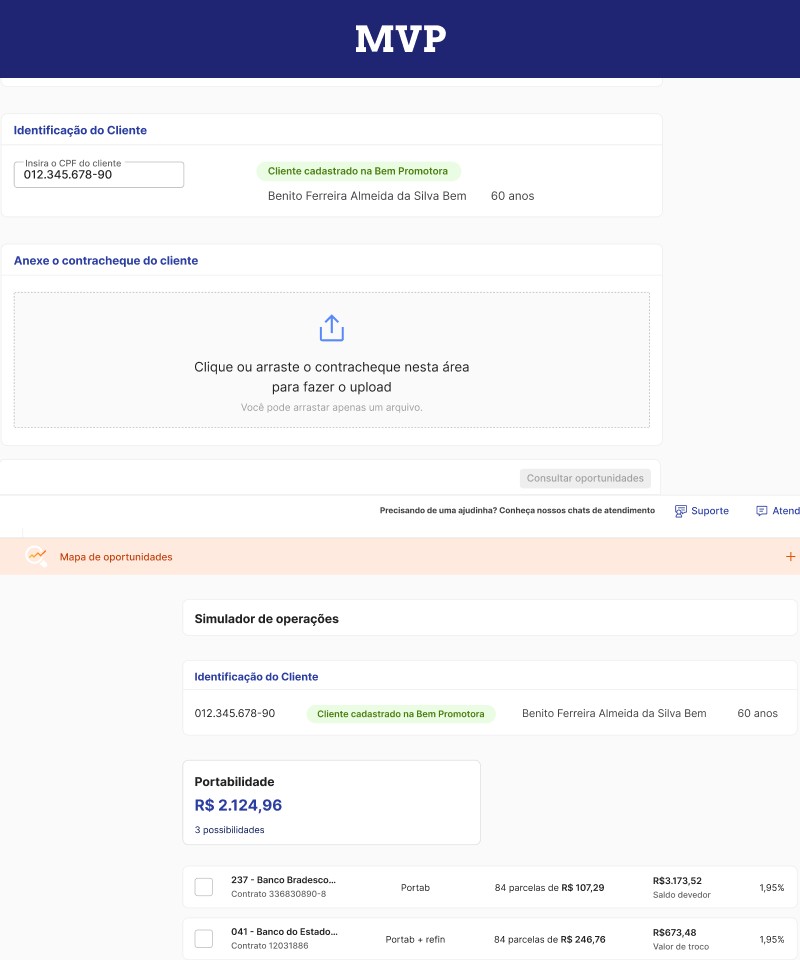
The client company had the challenge of increasing sales, and raised the idea of ​​building a product that would help its salespeople offer personalized and faster solutions to customers.

As part of this process, I conducted a Lean Inception to help the large number of stakeholders align on what they wanted and what a testable MVP would be.

The client company had the challenge of increasing sales, and raised the idea of ​​building a product that would help its salespeople offer personalized and faster solutions to customers.

As part of this process, I conducted a Lean Inception to help the large number of stakeholders align on what they wanted and what a testable MVP would be.

The planning

The planning

With the idea of the MVP, I began the challenge of reducing the risk of building the product by studying its usefulness, and using as little time as possible, so as not to miss the market's timing.

To do this, I chose to carry out exploratory interviews combined with concept testing with the product prototype, in order to create a sense of whether the solution would address the pain points raised and whether it would achieve the company's objectives.

With the idea of the MVP, I began the challenge of reducing the risk of building the product by studying its usefulness, and using as little time as possible, so as not to miss the market's timing.

To do this, I chose to carry out exploratory interviews combined with concept testing with the product prototype, in order to create a sense of whether the solution would address the pain points raised and whether it would achieve the company's objectives.

The exploration

The exploration

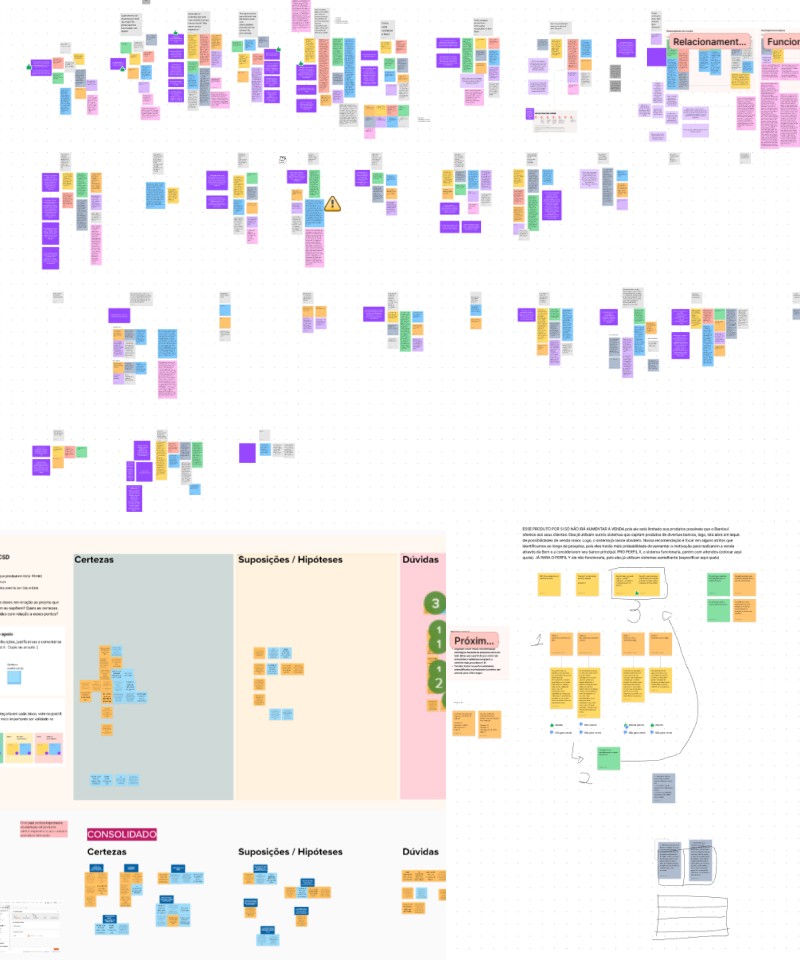
I started by immersing myself in the knowledge of stakeholders, conducting a CSD and prioritizing the main questions that would be answered in the discovery phase.

With this data, I created the research script, recruited and interviewed 9 salespeople divided into 3 target profiles. Following the interviews, I analyzed the findings to find patterns.

I started by immersing myself in the knowledge of stakeholders, conducting a CSD and prioritizing the main questions that would be answered in the discovery phase.

With this data, I created the research script, recruited and interviewed 9 salespeople divided into 3 target profiles. Following the interviews, I analyzed the findings to find patterns.

The result

The result

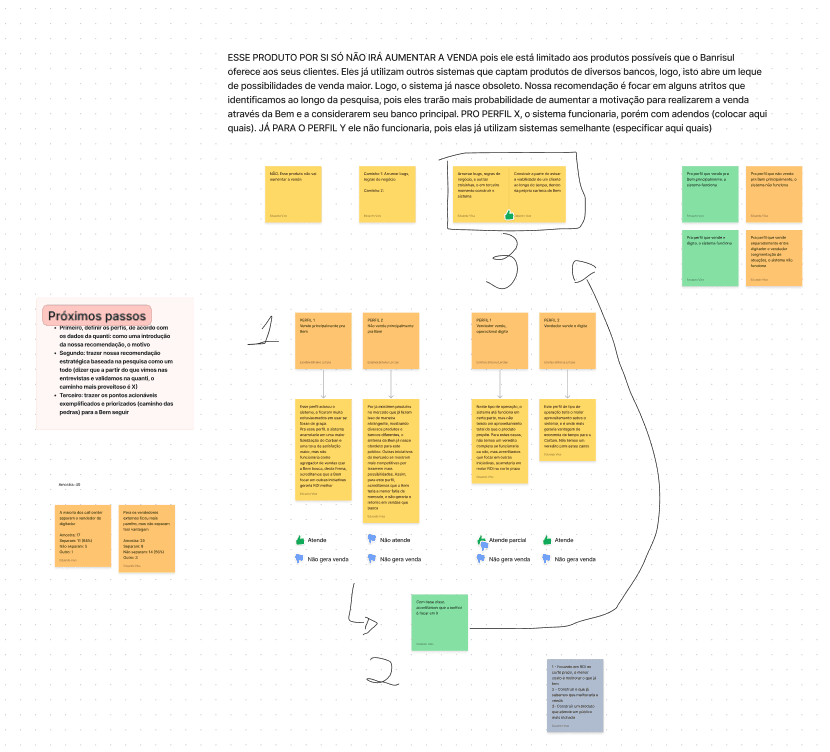
With the analysis ready, I was able to understand if and how the discovered patterns answer the research questions.

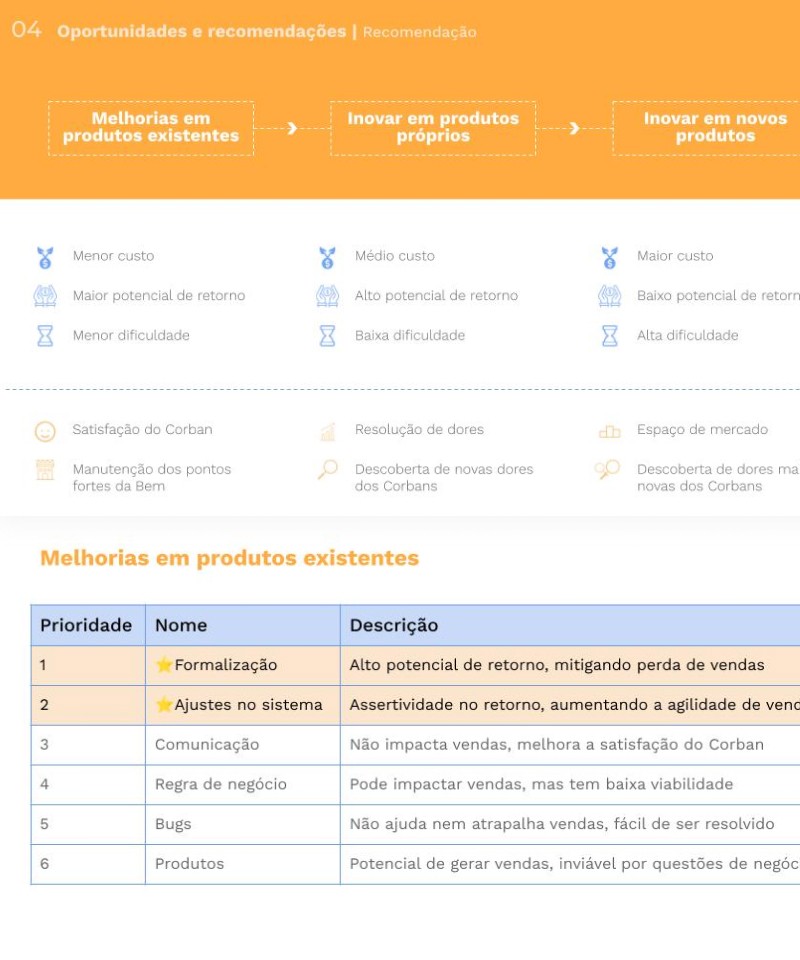
Understanding that the product would not help the client in their goal of increasing sales, I delivered a strategically prioritized list of actions, based on what was discovered, to impact this goal.

With the analysis ready, I was able to understand if and how the discovered patterns answer the research questions.

Understanding that the product would not help the client in their goal of increasing sales, I delivered a strategically prioritized list of actions, based on what was discovered, to impact this goal.

With this delivery, we demonstrated to stakeholders the importance of understanding the market for launching new products. A positive result especially amid doubts as to whether "wasting time on research" was ideal, instead of just launching the product.

Resulting in the saving of:

~R$ 150k

~R$ 150k

per month, building the product

~1100 hours

~1100 h

~1100 hours

per month, with the building team

Opportunity cost

Opportunity cost

resources can be used in projects with real return for the company

Did you like what you saw?

Did you like what you saw?

Let's talk about design 🎯 metrics📊 or World War II 🗺️

Let's talk about design 🎯 metrics📊 or World War II 🗺️